
13 Min Read
Mindset
Updated September 2026
When you think about food, what comes to mind?
Perhaps it’s nourishment.
Enjoyment.
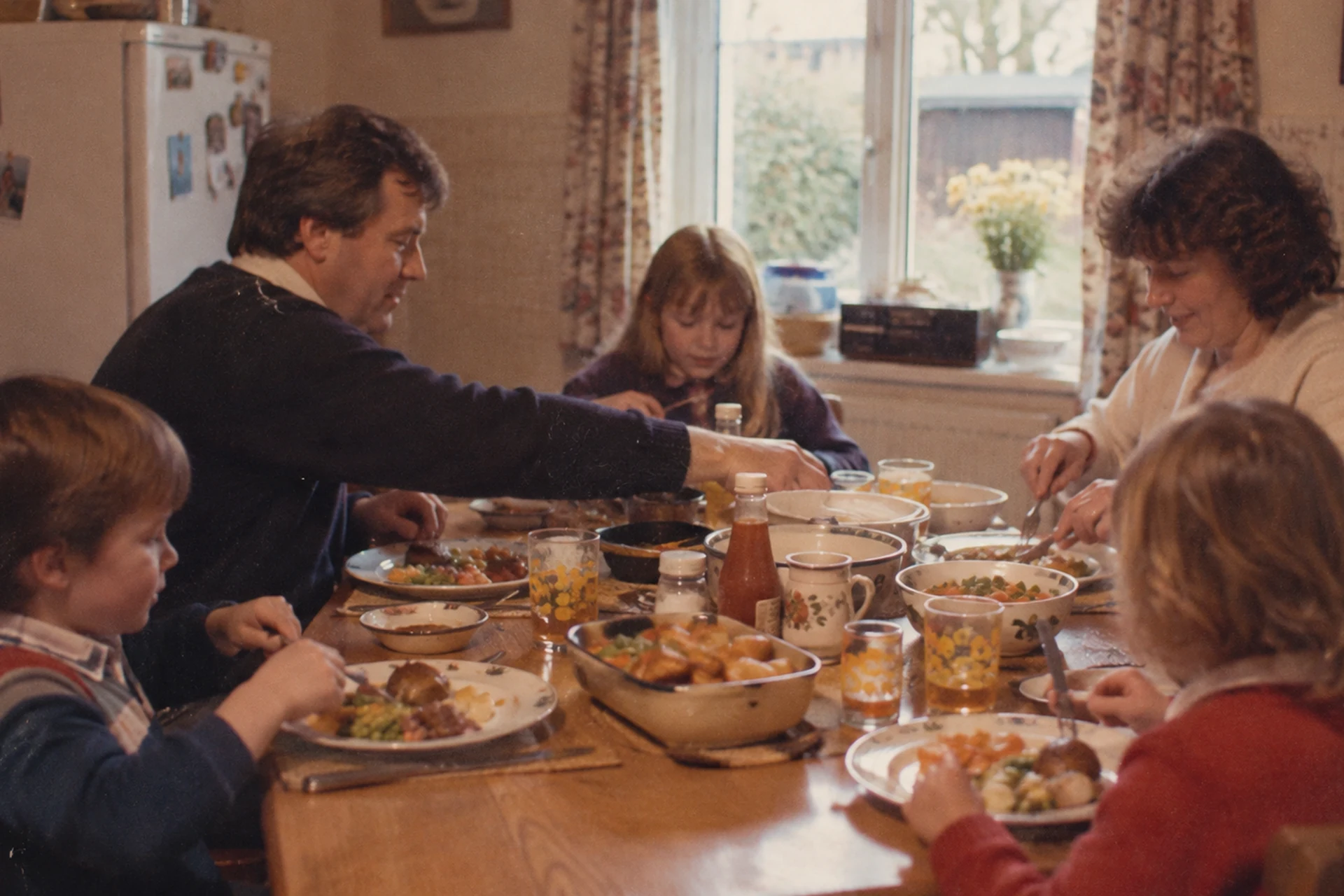
Family meals.
Celebrations.
Or perhaps food sometimes brings something else with it.
Stress.
Guilt.
Comfort.
Rules.
Control.
For something we interact with every single day, our relationship with food can become surprisingly complicated.
Understanding your relationship with food means looking beyond nutrition alone and exploring the emotions, experiences and learned behaviours that can influence why, when and how you eat
That’s because food was never just about hunger.
Food can be comfort after a difficult day.
It can be part of celebrating a birthday.
It can be a reward after working hard.
It can provide distraction when we’re stressed, bored or lonely.
It can even create a temporary feeling of safety or control.
None of that automatically means you have a problem with food.
It means you’re human.
But understanding why we sometimes eat can tell us far more than simply looking at what we eat.
And that’s where this new Relationship with Food series begins.
Not with another diet.
Not with another list of foods you’re supposed to avoid.
But with curiosity.
Because before we try to change our eating habits, it can be incredibly useful to understand how they developed in the first place.
What You’ll Learn
By the end of this article you’ll learn:
✔ Why eating isn’t always driven by physical hunger
✔ How food can become connected with comfort, reward and emotion
✔ Why some of these associations begin early in life
✔ How childhood and family environments can influence adult eating habits
✔ Why these patterns aren’t simply a lack of willpower
✔ How curiosity can help you begin understanding your own relationship with food
Food Isn’t Always About Hunger
At its most basic level, food provides nourishment.
Our bodies need energy and nutrients to function.
But that’s only part of our experience of eating.
Think about some of the situations where food naturally appears.
Birthday cake.
Christmas dinner.
Popcorn at the cinema.
Chocolate after a difficult day.
A takeaway on Friday night.
A meal with friends.
A biscuit with a cup of tea.
Food becomes woven into our experiences, routines and emotions.
And there’s nothing inherently wrong with that.
The difficulty can arise when food gradually becomes one of our main ways of changing how we feel.
Stress appears.
We eat.
We’re bored.
We eat.
We’ve had a difficult day.
We eat.
Eventually, the connection can become so familiar that we barely notice it happening.
Instead of Asking “Why Did I Eat That?”
Imagine you’ve had a stressful day.
You arrive home.
You open the cupboard.
Twenty minutes later you’ve eaten something you hadn’t intended to eat.
The immediate reaction might be:
“Why did I do that?”
Or perhaps:
“I have no willpower.”
But neither question tells us very much.
Try asking something different:
“What was I hoping food would do for me?”
Maybe you were physically hungry.
But perhaps you wanted comfort.
Relief.
A reward.
A distraction.
A moment to yourself.
Something enjoyable after an unpleasant day.
That’s a completely different conversation.
Instead of treating the behaviour as evidence that you’ve failed, you’re beginning to investigate what the behaviour was doing for you.
The Science (Made Simple)
Why can food become so closely connected with emotion?
One reason involves learning and reward.
Certain foods can activate reward pathways in the brain. If eating something enjoyable temporarily makes us feel better during stress or discomfort, our brain can learn the association.
Very simply:
Feeling → Behaviour → Reward
You feel stressed.
You eat something enjoyable.
For a short period, you feel better.
Your brain notices.
The next time a similar feeling appears, that previous behaviour becomes one possible response.
Repeat that association often enough and it can begin to feel automatic.
This is why describing emotional eating simply as a lack of willpower misses an important part of what’s happening.
When food repeatedly provides emotional relief, the brain remembers that association and can suggest the same response when the emotion returns.
It’s not simply about discipline. It’s also about learning.
And that’s encouraging.
Because learned patterns can be understood.

“You don’t choose the patterns you learn as a child. You do get to choose which ones you carry into adulthood..”
Trust Health Coaching
Your Relationship With Food Has a History
Your current relationship with food didn’t suddenly appear when you first decided to lose weight.
It has probably been developing for much longer.
Think back to childhood.
Were sweets given as rewards?
Did celebrations always involve particular foods?
Were you encouraged to finish everything on your plate?
Was wasting food considered unacceptable?
Were some foods described as “good” while others were “bad”?
Did adults around you regularly talk about dieting or their weight?
What were family mealtimes actually like?
Relaxed?
Social?
Rushed?
Controlled?
Stressful?
These experiences don’t automatically create unhealthy eating behaviours.
But they can contribute to the messages and associations we develop around food.
We absorb far more than nutrition from the environment in which we learn to eat.
Food Can Become Part of Our Emotional Language
Imagine a child has had a difficult day.
They’re upset.
An adult gives them something sweet.
The child feels better.
There’s nothing malicious about that interaction.
The adult is trying to comfort them.
But repeated experiences can gradually teach an association:
Upset → Food → Comfort
The same can happen with reward.
Achievement → Food → Celebration
Or boredom.
Nothing to do → Food → Stimulation
These associations aren’t necessarily conscious.
Nobody sits down at seven years old and decides:
“From now on, I’ll use food to regulate uncomfortable emotions.”
They simply learn from experience.
The REignite programme describes how repeated links between food and soothing, reward or celebration can blur the distinction between physical hunger and emotional needs over time.
And some of those patterns can follow us into adulthood.
This Isn’t About Blaming Your Parents
This distinction matters.
Looking at childhood isn’t about finding someone to blame for how you eat today.
Parents make decisions based on their own knowledge, circumstances, culture and experiences.
They also inherited beliefs about food from somewhere.
Perhaps they were taught:
“You don’t leave the table until you’ve cleared your plate.”
Maybe their parents lived through food scarcity.
Perhaps sweets were how their family celebrated.
Maybe dieting was simply normal in the household.
These messages can travel through generations without anyone consciously deciding to pass them on.
The purpose of looking backwards isn’t blame.
It’s understanding.
Because sometimes a behaviour that feels irrational today makes much more sense when you understand where it started.
The Rules We Carry Into Adulthood
Consider the instruction:
“Finish everything on your plate.”
As a child, perhaps that rule was repeated hundreds of times.
Eventually you don’t need somebody sitting beside you saying it.
The rule becomes internal.
Years later, you might be comfortably full in a restaurant and still feel strangely uncomfortable leaving food behind.
Your body might be saying:
“I’ve had enough.”
While an old learned rule says:
“Don’t waste food.”
That doesn’t mean one childhood instruction permanently determines how you’ll eat.
But it demonstrates how early messages can continue influencing decisions long after we’ve forgotten where they came from.
The workshop highlights several examples of these “invisible rules”:
“Eating carbs is bad.”
“I need to earn my food.”
“I have to clear my plate.”
And once a belief becomes familiar enough, we may stop recognising it as a belief at all.
It simply feels like the way things are.
A Lesson I’ve Learned Through Coaching
When people struggle with eating, they often assume the answer is more nutritional information.
Another meal plan.
More discipline.
A stricter set of rules.
But sometimes the person already knows a great deal about nutrition.
The challenge isn’t knowing that an apple contains more nutrients than a biscuit.
The interesting question is:
Why did the biscuit feel like exactly what you needed at 9pm after a stressful day?
That’s where understanding behaviour becomes important.
You can’t make an informed decision about a pattern you haven’t noticed.
And you can’t understand a pattern very well if every time it happens your immediate response is:
“I’ve failed again.”
Curiosity gives us information.
Judgement often ends the investigation.
Patterns Aren’t Personalities
This is one of the most important ideas I want to establish early in this series.
It’s easy to turn repeated behaviour into identity.
“I’m an emotional eater.”
“I’ve got no self-control around chocolate.”
“I’m terrible with food.”
“I’ve always been like this.”
But there’s a meaningful difference between saying:
“This is who I am.”
and:
“This is a pattern I’ve learned.”
Patterns can feel deeply ingrained.
They can be automatic.
They can have existed for decades.
But they’re still patterns.
The second social post captures this particularly well:
“Patterns are not personalities. They’re habits. And habits can change.”
That moves us away from self-blame and towards something far more useful:
curiosity.
What Did Food Mean in Your Home?
Here’s a simple exercise.
Complete this sentence without thinking too hard about your answer:
“Growing up, food usually meant…”
Perhaps your answer is:
Family.
Comfort.
Celebration.
Rules.
Love.
Reward.
Scarcity.
Pressure.
Enjoyment.
Conflict.
Or perhaps something completely different.
There isn’t a correct answer.
And you don’t need to immediately change anything you discover.
Simply notice it.
Then consider another question:
“Do I still see food that way today?”
You may begin recognising connections you’ve never considered before.
That’s awareness.
And awareness gives us somewhere to begin.
Emotional Eating Isn’t Necessarily the Problem
Eating because of emotion isn’t automatically something we need to eliminate.
Think about celebrations.
Sharing a birthday cake with someone you love isn’t a nutritional failure because physical hunger wasn’t the only reason you ate it.
Food has cultural, social and emotional meaning.
That can be a positive part of life.
The issue is more likely to arise when food becomes the primary or automatic response to difficult emotions.
If every stressful day ends with food…
If boredom almost automatically means snacking…
If sadness always triggers eating…
Then it can be useful to ask whether food is doing a job that something else might sometimes do better.
Not:
“How do I stop myself eating?”
But:
“What am I needing right now that food is temporarily providing?”
Sometimes the answer will still be food.
Sometimes it might be rest.
Connection.
Comfort.
Stimulation.
A break.
Or simply five minutes away from whatever is causing the stress.
The purpose isn’t to remove food.
It’s to create more choices.
Take a Moment…
Think back over your own relationship with food.
Ask yourself:
What did food represent when I was growing up?
Were there rules around eating in my home?
Was food commonly used as a reward or comfort?
What happened if I didn’t finish my meal?
How did the adults around me talk about food, weight and dieting?
Which of those messages might I still carry today?
You don’t need to analyse every childhood experience.
You’re simply looking for patterns.
Be a detective.
Not a judge.
One Small Step Today
Before eating something outside your normal meals today, try a simple 10-second pause.
Don’t use the pause to talk yourself out of eating.
Don’t ask whether the food is “good” or “bad”.
Simply check in:
“Am I feeding my body, or am I trying to change how I feel?”
Either answer is useful.
If you’re hungry, eat.
If you’re looking for comfort, you may still decide to eat.
But now you’ve noticed something.
And that small moment of awareness creates something that automatic behaviour doesn’t:
Choice.
The Trust Health Coaching Takeaway
Your relationship with food has probably been developing for most of your life.
It’s been influenced by family.
Culture.
Celebrations.
Emotions.
Experiences.
Habits.
And perhaps years of dieting.
So if there are parts of that relationship you’d like to change, expecting yourself to simply “have more willpower” isn’t particularly helpful.
Start with understanding.
Notice when you eat.
Notice what you’re feeling.
Notice the situations that trigger particular behaviours.
And begin questioning where some of your beliefs about food came from.
Because your current eating patterns are not necessarily fixed characteristics of who you are.
Many were learned.
And learning can change.
Awareness is the first step towards meaningful change.
Continue Reading
This is the first article in our new five-part Relationship with Food series.
Over the coming articles, we’ll move from understanding where our eating patterns come from towards recognising the emotions, beliefs and habits that can keep them going—and, importantly, what we can begin doing differently.
In Blog 2, we’ll explore emotional hunger and cravings in more detail, including why sometimes what feels like a craving for food may actually be a craving for relief.
We’ll also look at a deceptively simple question:
“What am I actually needing right now?”
You can explore more evidence-informed articles in the Trust Health Coaching Health Library.
Continue Your Health Journey with REignite
Understanding your health is important.
But lasting change comes from turning that awareness into action.
The REignite Your Health & Energy Programme brings together mindset, nutrition, lifestyle, physiology and behaviour to help you understand what’s influencing your health and make practical, sustainable changes that fit your life.
It’s not about perfection.
It’s about developing greater awareness, making better choices and building habits you can actually maintain.
The information in this article is designed to educate and empower. If you’d like personalised support to put these ideas into practice, I’d be delighted to help
About Trust Health Coaching
At Trust Health Coaching, we believe people deserve to live as happy and fulfilling a life as possible.
Our mission is to cultivate awareness, helping people better understand their health so they can make small, sustainable changes that last. We cut through the noise of modern health information, turning complex ideas into practical, everyday advice that supports lasting behaviour change.
Everything you read in the Trust Health Coaching Health Library is grounded in established health science and written to remove any overwhelm and help you understand these concepts a little better. My aim is to simplify complex health information into practical advice you can confidently apply in everyday life
Looking for more practical health tips? Visit the Trust Health Library to explore more evidence-based articles on mindset, nutrition, sleep and healthy habits
Distilling Knowledge to Cultivate Awareness
References
Birch LL, Fisher JO. (1998). Development of Eating Behaviors Among Children and Adolescents. Pediatrics.
Volkow ND, Wang GJ, Tomasi D, Baler RD. (2013). The Addictive Dimensionality of Obesity. Biological Psychiatry